Levee—Sturdyvant
Ma Rainey's Black BottomLevee—Sturdyvant is a relationship built around a promise of access that Levee understands as a chance to record his own songs, but that Sturdyvant ultimately converts into a low-priced offer to buy them. Their exchanges show more than a personal disappointment: the songwriter can create and argue for his work, while the man who controls the recording opportunity can decide whether it will be heard, recorded, or treated as merchandise.
The Recording Room and the Unequal Positions
The imbalance is present in the studio’s arrangement before Levee and Sturdyvant negotiate over songs. The performers work downstairs in the band room, while the recording studio and control booth are upstairs. Sturdyvant is visible in the booth, listening through earphones and speaking to the room over a speaker; Irvin tests the microphone at his direction. This layout gives Sturdyvant a practical distance from the musicians as well as a means to address them. It establishes him as the person who can monitor and authorize recording, while Levee’s work must pass through a system he does not control.
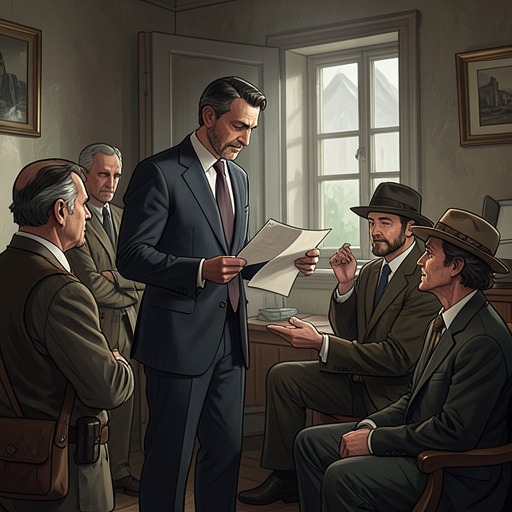
That structure matters when Sturdyvant asks whether Levee has finished a song. Levee answers eagerly and says he has written the other part as requested. He describes adding a section intended to give people something to dance to and help them forget their troubles. Sturdyvant responds approvingly, takes the song, and says he wants to see Levee about the songs when he gets the chance. The exchange appears to move Levee closer to a recording opportunity, but it does not specify when the meeting will happen or guarantee that the songs will be recorded. The gap between Sturdyvant’s encouraging response and the terms Levee believes they have agreed upon becomes the relationship’s central fault line.
Levee’s Expectation of a Recording
When Levee returns to the subject, he does not present the songs as a casual offer for sale. He reminds Sturdyvant that Sturdyvant had asked him to write them and had said he could record them. His question about what changed makes the earlier encouragement the basis of his claim: he believes he has fulfilled a request and that recording was the expected next step. Sturdyvant’s refusal therefore breaks an understanding as Levee sees it, even though the earlier exchange left its terms unstated.
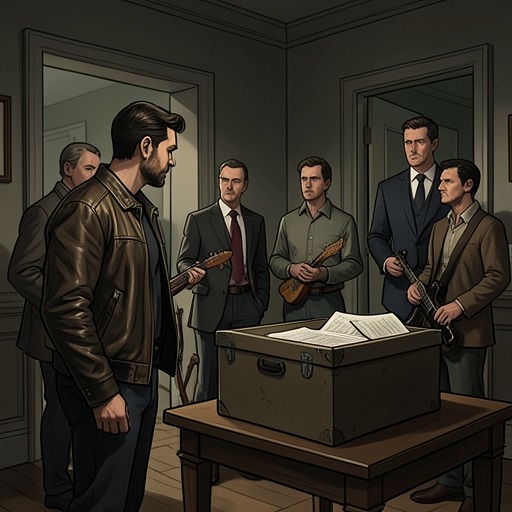
Levee also argues for the music itself. He says listeners are tired of jug-band music and want something exciting, with fire. He insists that Sturdyvant has not heard him play the songs and that his own performance is what would make them work. He has already chosen a band and believes the musicians can play well; if the people hear the music, he says, they will buy it. His case joins artistic judgment to a practical sales argument: the songs offer a different sound, and Levee believes his arrangements and performance can reach an audience. He is asking not only for payment but for the chance to demonstrate the music in the form he intends.
Refusal and the Purchase Offer
Sturdyvant answers that the songs are not the kind the company is looking for and doubts they will sell like Ma Rainey’s records. He offers five dollars for each song, presenting this as the best he can do and, later, as a favor. The change is consequential: instead of recording Levee as the composer and performer, Sturdyvant proposes paying a small fixed amount and taking the songs off his hands. Levee rejects the money because he wants to record the work, not simply receive payment for it.
The dispute also exposes how different their assessments of value are. Levee argues that the audience wants novelty and energy, and that hearing him play would establish the songs’ force. Sturdyvant treats the likely market as the deciding test, using the comparison with Ma Rainey’s established records to justify refusing the recording. He does not agree to hear Levee’s performance before making that judgment. When Levee repeats that he had been told he could record the songs, Sturdyvant does not resolve the contradiction; he returns to the five-dollar offer. The terms of the exchange are thus set by the person who controls access to the studio, not by the songwriter’s account of what was promised or by a trial of the music itself.
The Broken Exchange and Its Consequences
Sturdyvant finally presses the money into Levee’s coat pocket and leaves quickly. Levee follows him to the door, which slams in his face; he pulls out the cash, balls it up, and throws it on the floor. The gesture refuses the payment as a substitute for the opportunity he sought. It also gives the failed negotiation a physical ending: Sturdyvant exits with control of the decision, while Levee is left with rejected songs and money he does not want.
The other musicians silently gather their belongings, turning Sturdyvant’s refusal into the immediate end of the room’s shared work. As Toledo passes and steps on Levee’s shoe, Levee snaps at him. That separate incident does not explain the business dispute, but it follows the rejection and marks the strained atmosphere in which the recording session breaks apart. Levee’s appeal to Sturdyvant has produced neither a recording nor recognition of the earlier promise; the offer to buy the songs leaves the question of who controls their use unresolved from Levee’s perspective.
The contrast with Ma Rainey’s bargaining over Sylvester Brown’s pay clarifies the limits of Levee’s position. When Sturdyvant proposes that Ma Rainey’s own twenty-five dollars be given to Sylvester Brown, Ma Rainey insists that he must be paid separately and threatens that Sturdyvant will not make another record of hers if he refuses. Sturdyvant then produces the money. Ma Rainey also delays signing the forms, later signs them, and warns that another mistake could lead her to record elsewhere. Her established standing gives her leverage that Levee’s unrecorded songs do not. Against that contrast, Sturdyvant’s treatment of Levee shows how a seemingly open invitation to create can remain conditional on the approval of the person who controls the recording opportunity.